> ## Documentation Index
> Fetch the complete documentation index at: https://docs.vanna.finance/llms.txt
> Use this file to discover all available pages before exploring further.
# Earn Overview
> How Liquidity Providers (LPs) Earn on Vanna
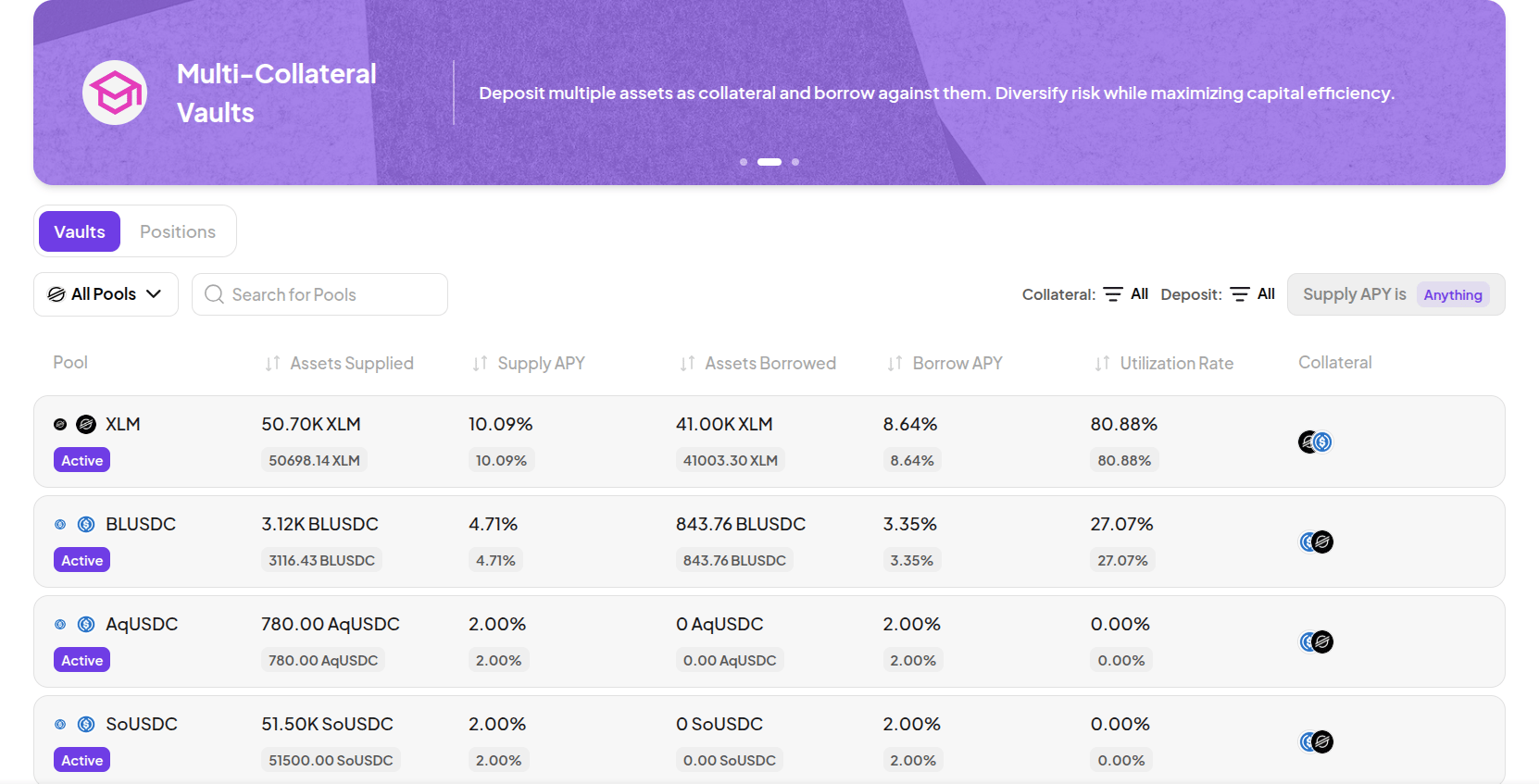
Earn is Vanna's native lending pool system. You supply assets to a lending pool, receive vTokens in return, and earn yield from the interest paid by traders - passively, without managing any open positions.
## How lending pools work in Vanna
Vanna's lending pools are the core of the protocol's liquidity infrastructure. Liquidity providers deposit assets into these pools, making them available for traders who want to open leveraged positions. Traders borrow from the pools to fund their strategies and pay interest on those borrows continuously.
When a borrower repays their loan, the interest returns to the pool. This raises the exchange rate of vTokens - each vToken becomes redeemable for slightly more of the underlying asset over time. When you withdraw, you redeem your vTokens at the current exchange rate and receive more than you originally deposited. That difference is your earned yield.
The Supply APY adjusts dynamically based on borrower demand and pool utilization, so it moves as market conditions change.
To understand how vTokens, exchange rates, and the interest rate model work in depth, see [Lending Pools](/learn/lending-pools) and [vTokens](/learn/vtokens) in Core Concepts.
## What drives LP earnings
**Borrower demand and utilization** - When more of the pool is borrowed, interest rates rise automatically. Higher utilization means higher rates, which means more interest returned to LPs on each repayment.
**Liquidation penalties shared with LPs** - When a trader's health factor drops to the liquidation threshold, their position is liquidated. A portion of the liquidation penalty is distributed to the lending pool, adding an additional revenue stream on top of borrower interest.
**Dynamic interest rates** - Interest rates adjust continuously based on the rate model. When utilization increases, rates rise. When utilization drops, rates moderate - making borrowing cheaper and attracting more traders, which brings utilization back up.
## What you can do
Step-by-step guide to depositing assets, receiving vTokens, and starting to earn yield.
Redeem your vTokens and receive your original deposit plus all earned yield.
## Before you start
* **Wallet connected** - your wallet must be connected to Vanna. See [Connect Your Wallet](/guides/connect-wallet) if you haven't done this yet.
* **Assets to supply** - the asset you want to supply, available in your connected wallet.
Earn positions carry smart contract risk and liquidity risk. If utilization is near 100%, withdrawals may be temporarily limited until borrowers repay. This is rare but possible.
## Dive deeper
Want to understand how lending pools and vTokens work under the hood?
How pool accounting, borrow shares, and interest accrual work at the protocol level.
The share token mechanism - how exchange rates rise and yield accrues.
How borrow rates are calculated and what drives APY changes.
What happens when a trader is liquidated and how it affects LP positions.